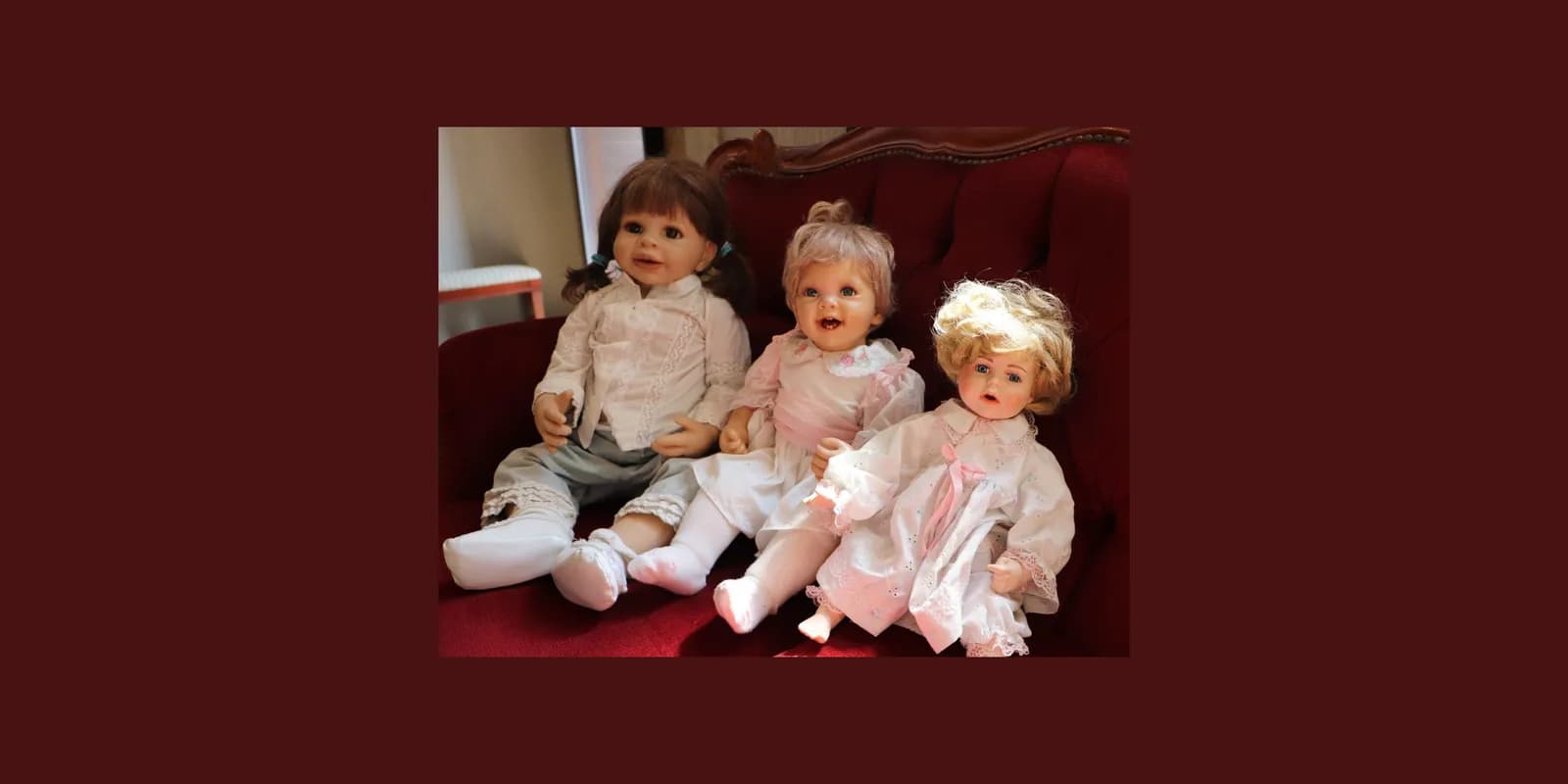
Kalisz is famous for its ancient history, textiles, lace and piano-making tradition. Yet one of the city's most unusual industries has almost disappeared from public memory.
For several decades, Kalisz was home to a major doll and toy factory whose products travelled far beyond the city. Dolls made here were sold across markets of the Russian Empire and are now found in museum collections and private collections in Poland and abroad.
It is a remarkable story of industry, craftsmanship and international trade, with its roots in the late 19th century.
The factory that put Kalisz dolls on the map
The story begins with Jakub Fingerhut, who established a doll and toy business in Kalisz in the late 19th century.
There is some uncertainty over the exact founding date. 1884 is traditionally given as the beginning of the enterprise, while surviving factory records have also been interpreted as pointing to 1892. The earlier date is therefore best described as the traditional founding date.
The business later became closely associated with Adam Szrajer, who married Fingerhut's daughter Berta and eventually became the leading figure in the enterprise. Under Szrajer, the factory expanded into a substantial industrial operation.
At its height, it employed around 270 people and produced a wide range of toys, including dolls, wooden and plush toys, balls, toy vehicles, musical instruments and rattles. Dolls, however, became one of its most distinctive products.
Kalisz dolls went abroad
The factory's success was closely connected to Kalisz's position within the Russian Partition.
Before Poland regained independence in 1918, Kalisz was part of the Russian Empire. Its manufacturers operated within a much wider eastern European market, and the city's doll industry was no exception.
Kalisz-made dolls were sold into Russian markets, and some surviving examples feature Russian-language markings.
This international trade is one reason the story is bigger than a local manufacturing curiosity. A doll made in Kalisz could end up hundreds of kilometres away, eventually becoming a treasured childhood possession and, decades later, a collector's item.
The city's official historical material notes that many Kalisz dolls ended up in Russian collections, while surviving examples can be relatively difficult to find in Poland.
Where the dolls survived
The factory disappeared, but some of its products survived.
The Museum of Toys and Play in Kielce holds a Kalisz-made doll from the 1930s. The Museum of the History of Katowice also has a doll associated with the Kalisz factory, bearing the ASK mark.
These surviving objects offer a rare glimpse into an industry that once employed hundreds of people. They also demonstrate the variety of Kalisz production. The dolls were not simply identical factory products. Their faces, sizes, clothing and materials could vary considerably.
For collectors, that variety is part of their appeal.
See more: Kalisz District Museum: A Century of Preserving the Story of Kalisz
Source: kalisz.pl
Image credit: Michelletto, Wikimedia Commons, CC BY-SA 4.0 / M. Bartnik, A. Tomaszewska, kalisz.pl