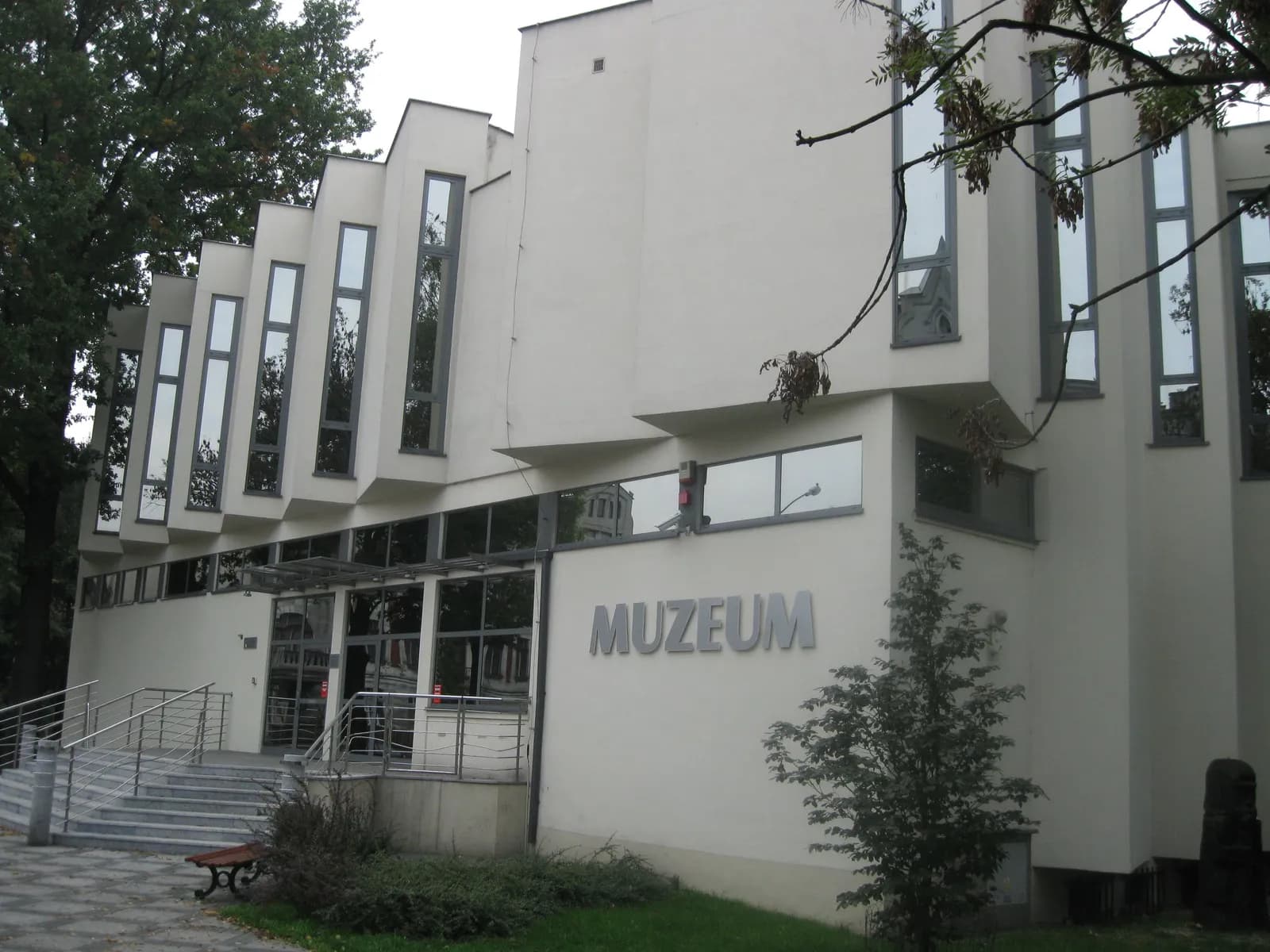
Some museums inherit an uninterrupted collection; in Kalisz, the story is also about what disappeared, what survived and what was painstakingly gathered again.
Kalisz is one of Poland's oldest cities, and its history reaches far beyond the streets of the modern centre. Archaeological discoveries, medieval settlements, regional traditions, art and the lives of individual residents all form part of a much larger story.
For more than a century, the Kalisz District Museum has been collecting pieces of that story.
The first attempts to establish a museum in Kalisz date back to 1883, but the institution formally came into being on 17 May 1914. The Kalisz Land Museum was created through the merger of an Archaeological Museum and a Local History Museum, with its first home in a tenement at 4 Kilińskiego Square.
Its early years were marked by circumstances that could easily have brought the young institution to an end.
A collection shaped by survival
During the First World War, Kalisz suffered devastating destruction at the hands of Prussian troops, with much of the city centre destroyed. Yet the museum's headquarters survived, allowing its collection to continue developing. Objects connected with the wartime experience were added to its holdings, creating a record not only of Kalisz's distant past but also of events experienced by its own generation.
In 1928, the local authorities took over the museum and moved it to Kalisz Town Hall. The interwar period brought further growth, including an important donation from the Leopold family of Rzepiszewo.
The Second World War brought a far more serious rupture.
The museum closed in September 1939 after Kalisz was incorporated into German-occupied Wartheland. In 1941, most of its artefacts were removed from the city and subsequently disappeared. The museum's library suffered a different but equally disturbing fate. Alongside books taken from Kalisz libraries and private homes, the collection was used by the German authorities to fill the Babinka Canal.
After the war, the museum had to begin again.
Surviving objects were gathered at the Town Hall before the institution moved through several locations during the following decades. In 1953, its collections reached the former provincial treasury building at 12 Kościuszki Street, which remains the museum's main home today. The institution received its present name, Kalisz District Museum, after a new wing was opened and a new statute granted in 1976.
The history of the collection is therefore inseparable from the history of the museum itself. What visitors see today represents not simply the survival of an old collection, but decades of reconstruction through archaeological research, purchases and donations.
From one collection to a regional story
Today, the main building presents five permanent exhibitions covering history, archaeology, ethnography, art and the work of Kalisz-born artist Tadeusz Kulisiewicz. A major renovation of the building was completed in 2023, while the former patio has been adapted to accommodate the museum library and old-print collection.
The museum's holdings now number tens of thousands of objects, documenting Kalisz and south-eastern Greater Poland.
Among the most significant are archaeological discoveries that connect the region to much earlier chapters of Polish history. The museum highlights the hoard of cross-shaped denarii from Słuszków, a denarius of Bolesław the Brave and a Roman sword bearing an armourer's signature. The collection also includes Celtic coins discovered around Kalisz, evidence of activity in the region long before the medieval city took shape.
This archaeological dimension becomes even more tangible at the Archaeological Reserve in Kalisz-Zawodzie, one of the museum's two current branches.
The reserve occupies the site of an early medieval stronghold associated with the origins and development of Kalisz. A reconstructed section of the settlement includes a palisade and bridge, wooden buildings, defensive structures and part of the ground floor of a Romanesque collegiate church. The reconstruction allows visitors to encounter the archaeology of Kalisz as a physical landscape rather than solely through objects in display cases.
The museum's second branch takes a very different approach to regional heritage.
From archaeology to memory
The Maria Dąbrowska Manor House in Russów preserves the memory of one of Poland's important 20th-century writers, who was born there in 1889.
Dąbrowska spent her childhood and youth in Russów, but maintained a lasting connection with the Kalisz region, reflected in her writing, memoirs and diary. The museum was established after her death in 1965, with the restored manor house opening as a memorial room in 1971 before becoming a branch of the Kalisz District Museum in 1979.
The surrounding park adds another layer to the story. Its ethnographic section includes historic rural buildings relocated from villages around Kalisz, creating a picture of traditional life in the region alongside the literary history of Dąbrowska and her family.
Together, the three locations reveal the breadth of the museum's purpose.
One preserves objects from archaeological excavations and the earliest history of the Prosna region. Another explores literature, rural life and memory. The main museum brings together archaeology, history, ethnography and art under one roof.
That breadth is perhaps the most important part of the institution's story. The museum's collection was once scattered and severely diminished by war, yet its purpose remained: to preserve evidence of the people, places and cultures that shaped Kalisz and its surrounding region.
More than a century after the museum was formally established, its collections continue to make that past visible. For Kalisz, this is not simply a matter of preserving old objects. It is a way of maintaining a connection between the city that exists today and the many generations that came before it.
Visitor Information
Main Museum
Muzeum Okręgowe Ziemi Kaliskiej
ul. Kościuszki 12
62-800 Kalisz
The museum advises visitors to check its official channels for current opening hours and admission information, particularly for the individual branches.
Branches
Archaeological Reserve in Kalisz-Zawodzie
Kalisz-Zawodzie
Literary Branch – Maria Dąbrowska Manor House
Russów
Opening hours and visitor arrangements vary between the main museum and its branches. Check the museum's official website before travelling.