Kalisz, set in the Prosna River valley in Greater Poland, is often described as the oldest documented city in Poland. Its claim rests on a remarkable ancient reference: around AD 150, the Greek geographer Claudius Ptolemy mentioned a place called Kalisia in his work Geography. Many scholars identify that settlement with modern Kalisz, giving the city a written history stretching back nearly 1,900 years.
But Kalisz’s story begins even earlier than the written record. Archaeological traces show human activity in the area from the Mesolithic Era, long before Poland existed as a state. The river valley, fertile land and natural routes through the region made this a place where people settled, travelled and traded for thousands of years.
A City Shaped by the Amber Route
Kalisz grew because of its position at a natural meeting point of trade routes. Most famously, it was linked with the Amber Route, the ancient network of paths that connected the Baltic coast with the Adriatic and the wider Roman world.
Amber from the Baltic was highly prized across Europe, and settlements along the route became important stopping places for merchants, travellers and craftspeople. Kalisz’s location helped turn it into more than a passing point. It became a place of exchange, movement and cultural contact, a role that would continue throughout much of its history.
Zawodzie and the Early Piast World
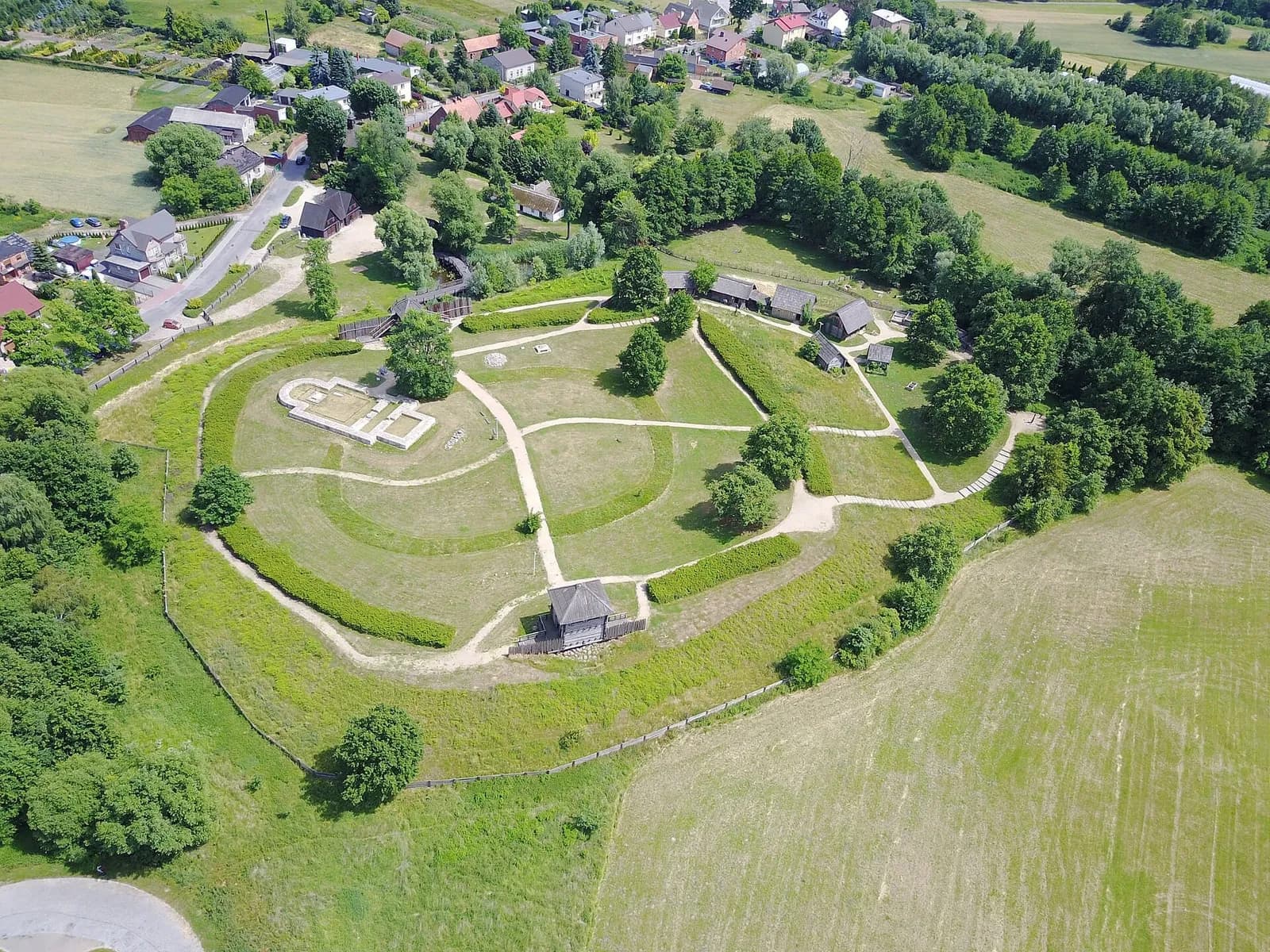
By the early Middle Ages, the Kalisz area had become an important centre for the Piast dynasty, Poland’s first ruling family. The early medieval stronghold at Zawodzie, just south of today’s city centre, was one of the major fortified settlements of the region.
The stronghold developed from the 9th and 10th centuries and became an important part of early Polish state-building. Its position near the Prosna gave it natural defences, while its scale shows the importance of Kalisz in the early Piast world.
Today, the Zawodzie Archaeological Reserve helps bring that period back to life. Visitors can see reconstructions of early medieval buildings, defensive structures and remains connected with one of the oldest chapters in the city’s story.
Medieval Kalisz and a Multicultural Town
Kalisz continued to grow in the Middle Ages. Around 1257, the town received municipal rights under Środa Śląska law, helping shape the urban layout that can still be traced in the city centre today.
Its location brought merchants, settlers and communities from different backgrounds. One of the most significant moments in the city’s medieval history came in 1264, when Duke Bolesław the Pious issued the Statute of Kalisz, a major charter setting out legal protections for Jewish communities in Greater Poland.
This made Kalisz not only a centre of trade and administration, but also a place with a deep multicultural history. Over the centuries, Poles, Germans, Jews and other communities all contributed to its character.
Destruction and Reconstruction
One of the darkest moments in Kalisz’s history came at the start of the First World War. In August 1914, German forces destroyed and burned much of the city. Around 95% of the buildings in the historic centre were left in ruins, and the population fell dramatically.
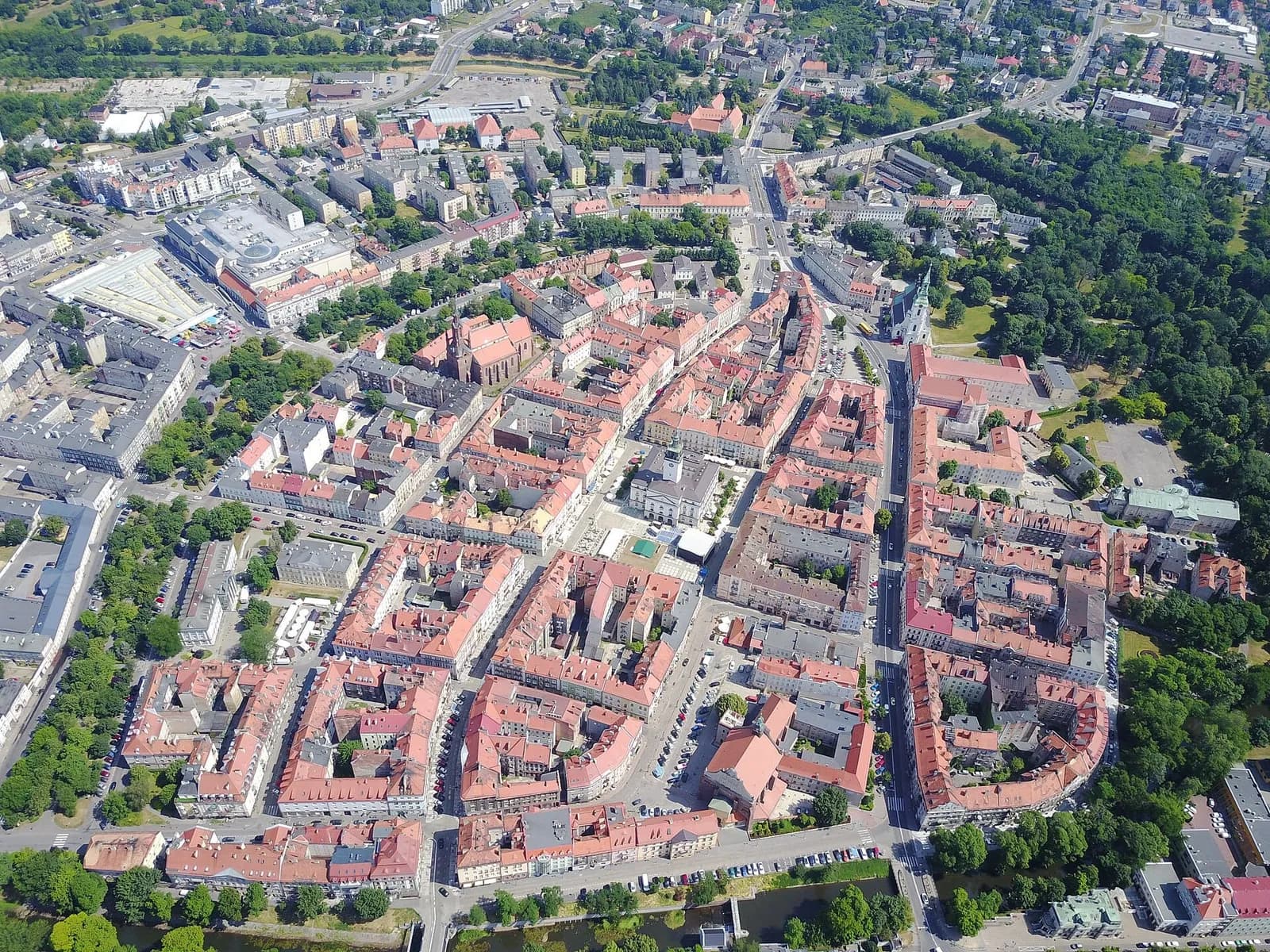
The rebuilding of Kalisz in the 1920s and 1930s became one of Poland’s early large-scale urban restoration projects. The old centre was not rebuilt as an exact copy of what had been lost, but its medieval street layout was preserved. That decision helped protect the shape and memory of the historic city, even after so much physical destruction.
Kalisz Today
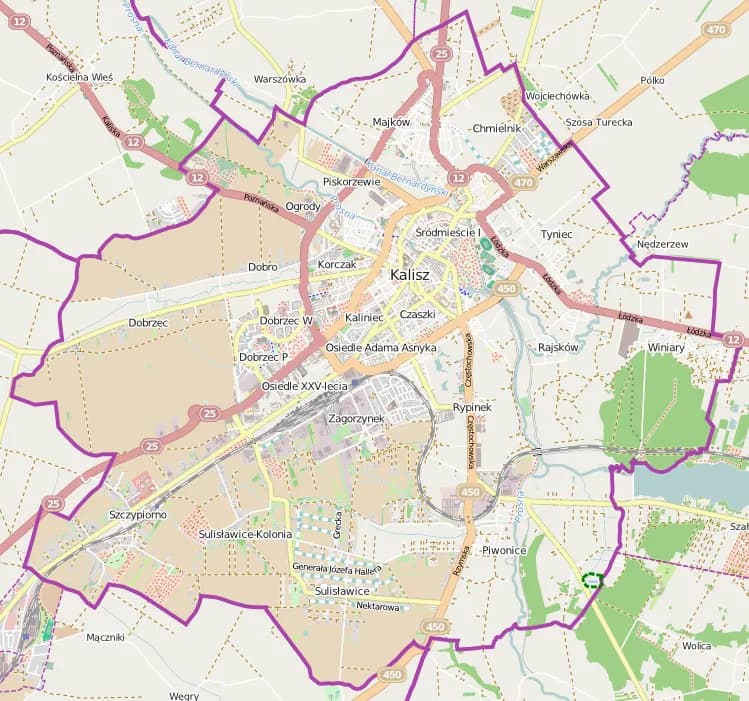
Modern Kalisz remains one of the key cities of Greater Poland. Covering around 70 square kilometres and home to around 88,000 residents, it continues to balance its long heritage with everyday civic, cultural and economic life.
For visitors, Kalisz offers more than an ancient claim to fame. Its city centre, river setting, theatres, churches, parks and archaeological sites all tell different parts of the same story: a city shaped by trade, resilience and renewal.
From Ptolemy’s Kalisia to the Amber Route, from Piast strongholds to post-war reconstruction, Kalisz is a place where Poland’s deep past still feels close to the surface. It is not simply one of the country’s oldest cities. It is one of its great historical crossroads.
Image: Aerial view of Kalisz by Fallaner, licensed under CC BY-SA 4.0.