The heat of summer has eased, the evenings are getting shorter and the first signs of autumn are appearing in the trees. But this is still a good time to be outside, perhaps better for walking and cycling than the hottest weeks of the year.
In Kalisz, you do not have to go far to find somewhere green. The Prosna runs through the city, the historic Park Miejski sits remarkably close to the centre, and a chain of parks and smaller green spaces gives residents plenty of opportunities to stretch a walk into an afternoon.
There is history here too. In Kalisz, a stroll through a park can take you past traces of the medieval city, while a walk along the river can lead towards Zawodzie and the reconstructed early medieval stronghold that tells the story of Kalisz's beginnings.
For a city with such a long history, its green spaces are surprisingly easy to enjoy.
Start with Park Miejski and the Prosna
If there is one place that captures the relationship between Kalisz and its landscape, it is Park Miejski.
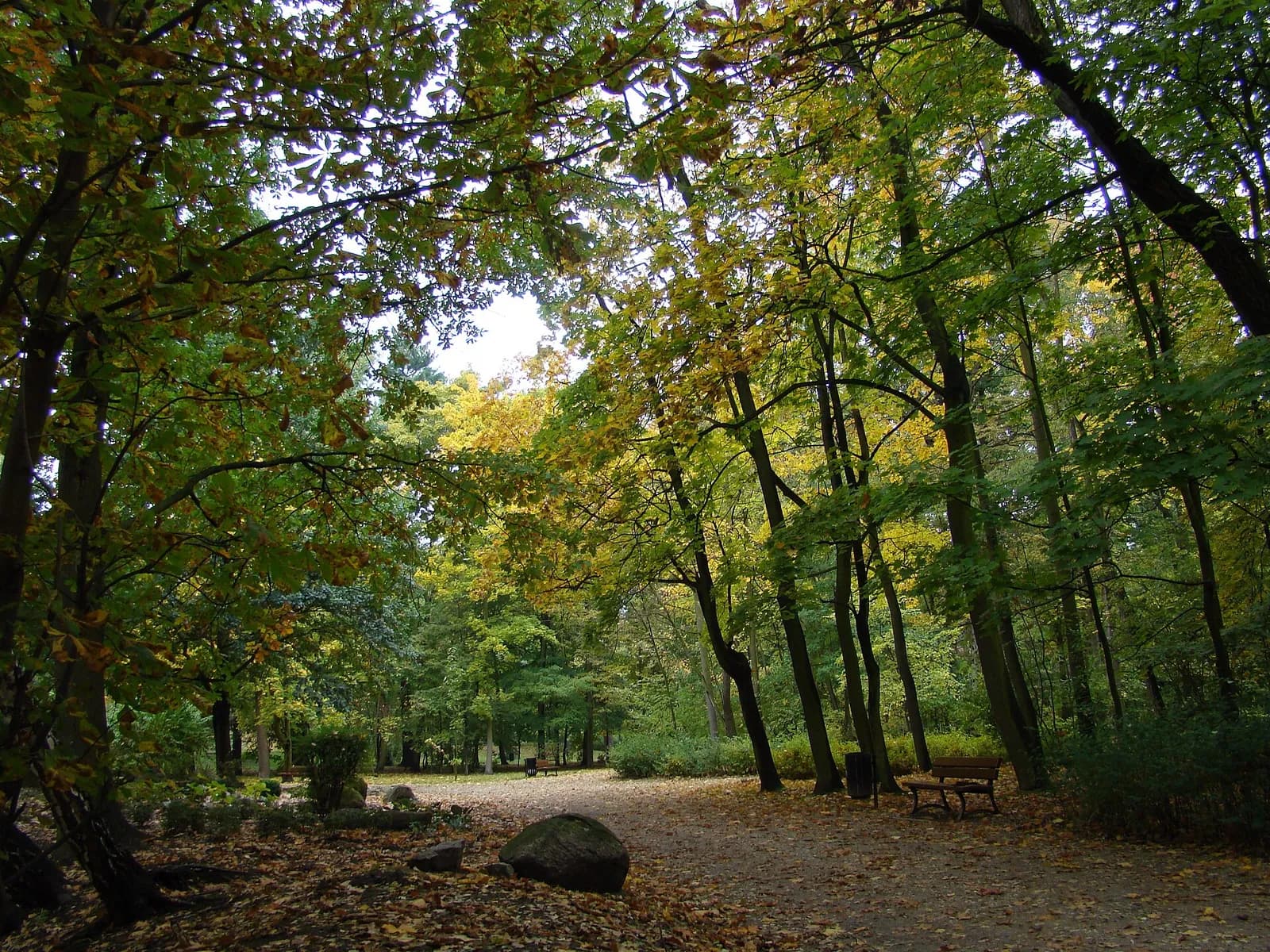
Created in 1798 on the site of former Jesuit gardens, it is officially described by the city as the oldest publicly accessible park in Poland. Its location is one of its greatest strengths. The park sits immediately beside the city centre, but once you are beneath the mature trees and alongside the water, the atmosphere changes considerably.
The Prosna and its tributaries surround the park, while the wider Park Miejski and so-called Nowy Park together cover around 30 hectares. Among the features that have become part of the park's character are Staw Kogutek, the Asnyk oak, the historic Hydropathia building and the area around the Theatre Bridge.
It is the kind of place that works without a plan.
Come for half an hour after work and follow the paths along the river. Bring the children for a longer weekend walk. Sit on a bench with a coffee. Or simply cross the park on the way into town.
September adds another reason to linger. The trees are beginning to change, but there is still enough green to make the park feel more like late summer than full autumn.
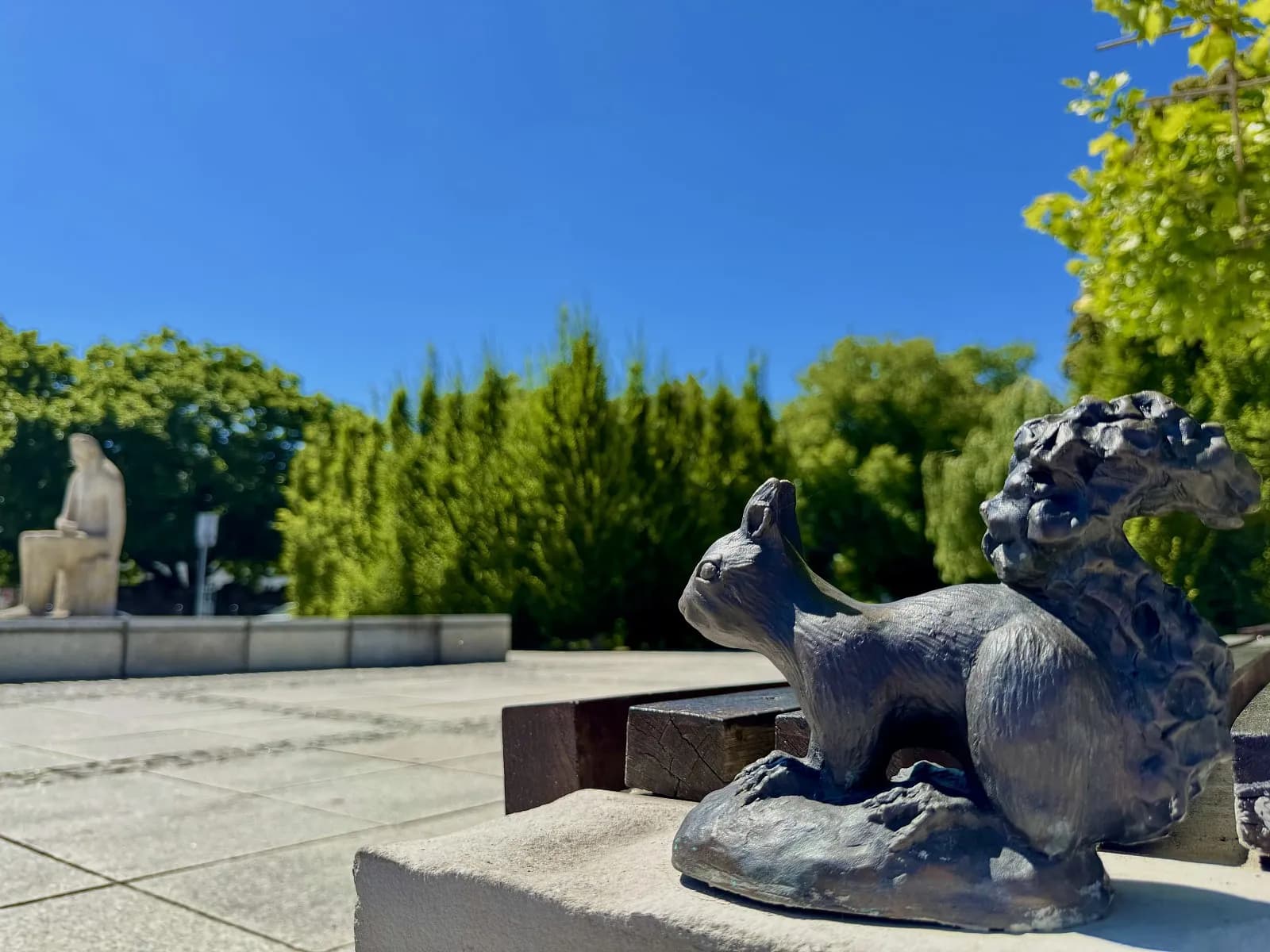
And if you are lucky, you may encounter one of the park's famous squirrels. The city's Kaliski Szlak Wiewiórek, or Kalisz Squirrel Trail, includes a stop here and describes the park as home to hundreds of squirrels.
Follow the river rather than the clock
One of the pleasures of Kalisz is that the Prosna is not simply something to look at from a bridge.
It helps shape the way the city is experienced.
The river passes the theatre, the park and the historic parts of the centre before opening up towards the southern districts. A riverside walk can therefore become part sightseeing, part exercise and part escape from the built-up centre.
For visitors, it offers a useful alternative to simply following a list of monuments. For residents, it is one of those everyday routes that can become part of a routine.
September is particularly suited to it. The cooler temperatures make walking more comfortable, while the lower afternoon sun can give the river and surrounding trees a very different appearance from the bright, high light of June and July.
If the weather is dry, it is also a good time to take a bicycle.
Planty Miejskie: a green walk through Kalisz's history
For something shorter, Planty Miejskie are easy to overlook because they are woven into the city rather than presented as one large park.
That is part of their charm.
The Planty form a belt of greenery around part of the historic centre, stretching from ul. Wodna towards plac Kilińskiego. Their history is closely tied to the former Kanał Babinka, a branch of the Prosna that once ran along this part of the city.
Today, benches and trees provide a place to pause in the middle of the urban landscape. But there is considerably more history beneath the surface.
The city's official park route notes that the former canal was filled in during the Second World War. The area is also home to the Pomnik Książki, commemorating Polish and Jewish books that were buried there during the German occupation, as well as a monument to the Kalisz-born poet Adam Asnyk.
It is a good example of what makes walking in Kalisz rewarding.
You do not necessarily have to choose between nature and history. They are often occupying the same few hundred metres.
Zawodzie: where the landscape becomes history
South of the centre, Zawodzie offers one of Kalisz's most distinctive combinations of landscape and heritage.
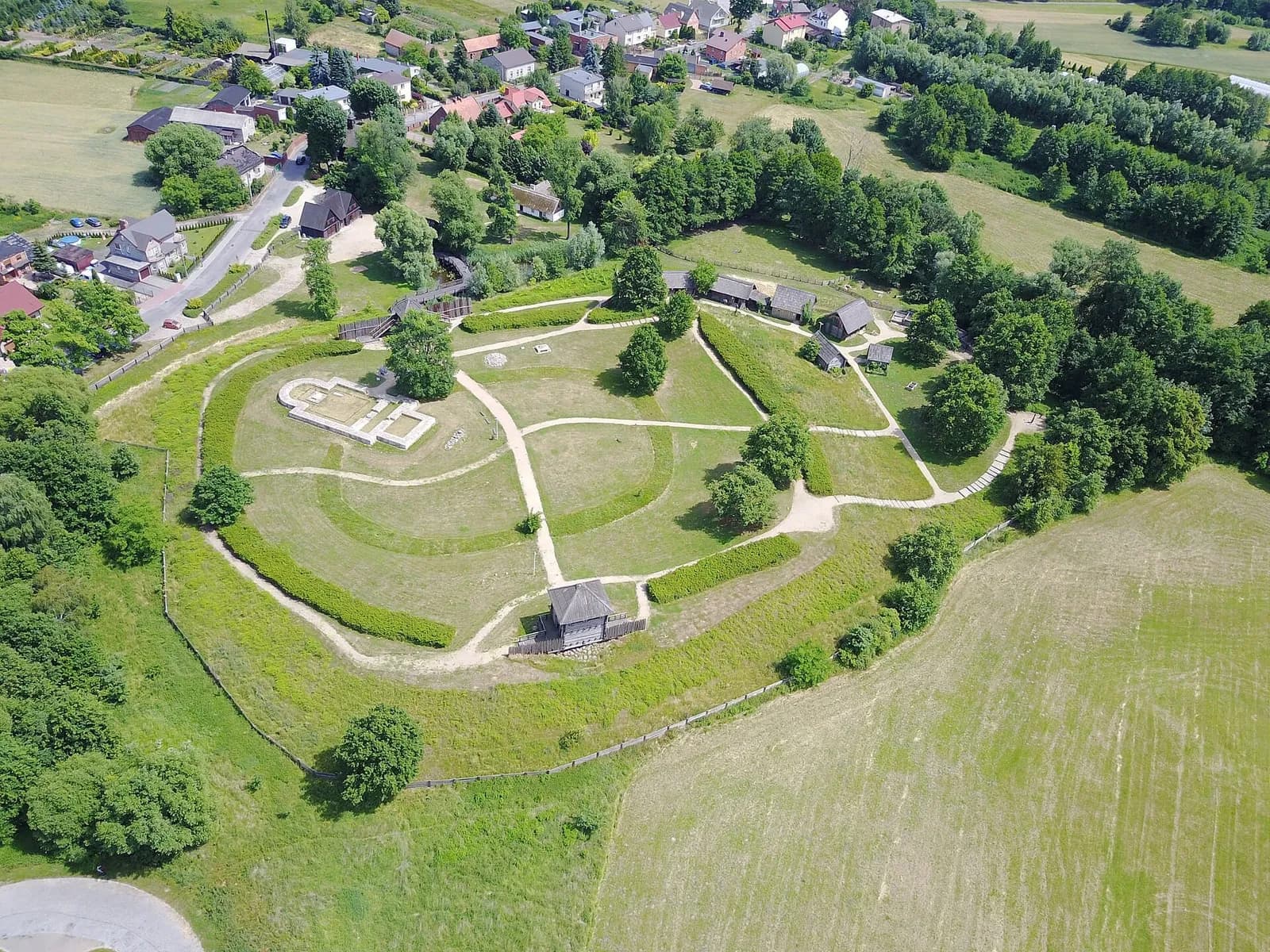
The Archaeological Reserve stands on the site of an early medieval stronghold and is often described as the cradle of Kalisz. The settlement developed beside the Prosna and became an important centre in the early Piast period.
What makes the visit particularly accessible is that this is not simply an archaeological site marked by information boards.
The reserve contains reconstructions of the medieval settlement, including a defensive tower, wooden bridge, palisades, houses and other structures. There is also a reconstruction of part of the Romanesque collegiate church and an eighteenth-century wooden cottage used for ethnographic exhibitions.
That makes Zawodzie particularly good for a family visit. Children can see something tangible rather than simply being asked to imagine what an early medieval settlement looked like.
It is also an outdoor attraction, which gives it a different feel from a conventional museum.
Recent activity at the site shows that its educational role remains important. In June 2026, students from Kalisz's Liceum Sztuk Plastycznych took part in a painting workshop at the reserve, using the historic landscape as the setting for their work.
In September, that combination of open space, history and changing vegetation can make Zawodzie an especially rewarding stop.
A greener way to see Kalisz
Kalisz's parks are not just pleasant backdrops to the city. They reveal how the city has developed.
The Prosna explains much of its geography. The Planty preserve traces of a landscape that has disappeared. Park Miejski connects the modern centre with centuries of leisure and civic life. Zawodzie takes the story back to the beginnings of medieval Kalisz. And newer recreational spaces show how today's residents continue to use the outdoors for sport, family life and community events.
That is perhaps the best reason to explore Kalisz on foot this September.
You are not simply going for a walk. You are seeing the city from a different angle, one in which the river, trees, parks and historic places all become part of the same story.
And with autumn still gathering pace rather than having fully arrived, there is plenty of time to get outside and enjoy it.
See more: Poland’s Forgotten Capital of Dolls
Image credit: Piotr Zdrowicki, Wikimedia Commons, CC BY-SA 3.0